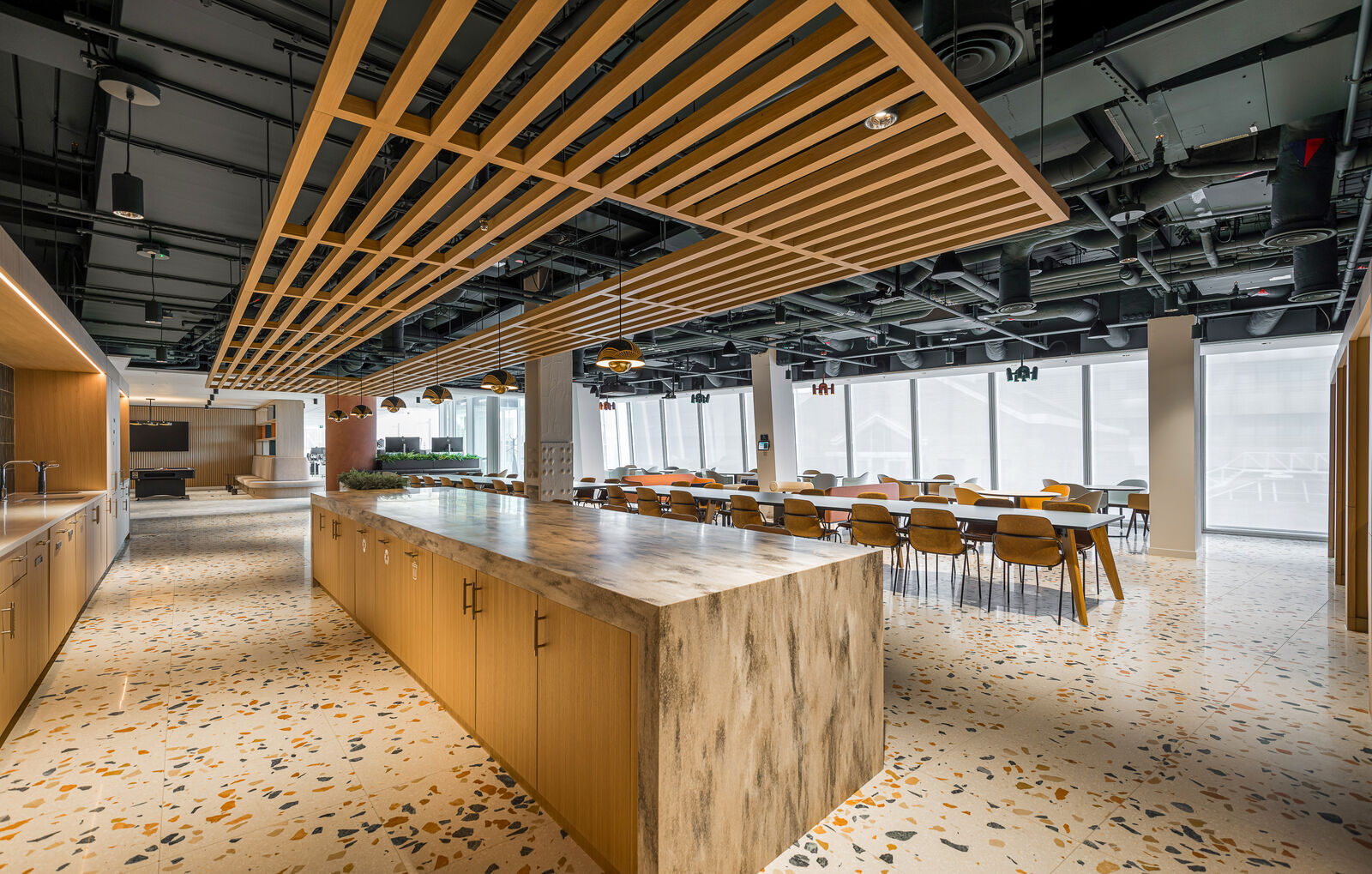
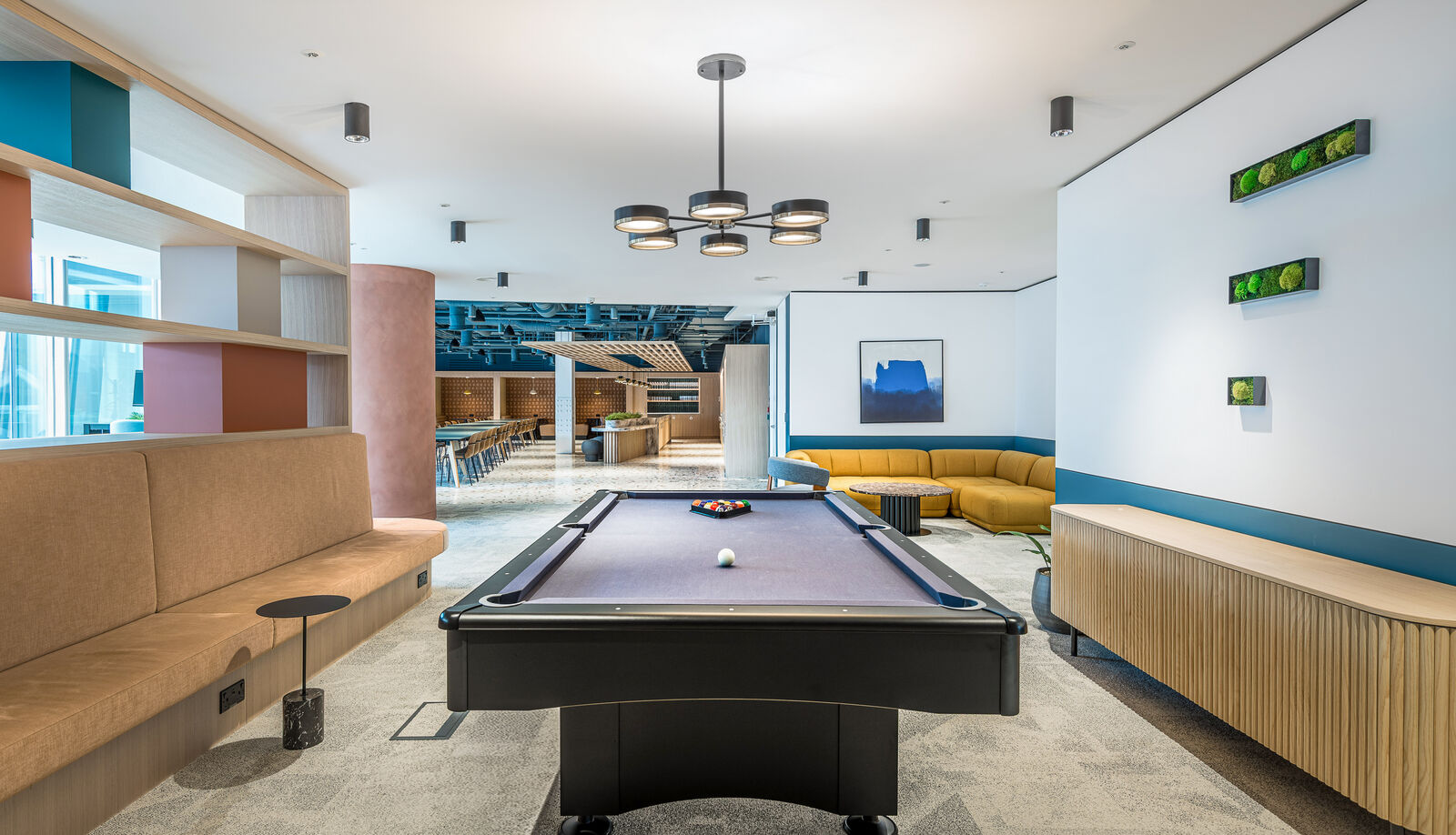
Every office has a tea point. Very few have somewhere you would choose to stand for five minutes. The brief here asked for a social kitchen along the lines of a coffee shop, with local artisanal offerings, which is a specific enough instruction to design against.
Build it like a bar
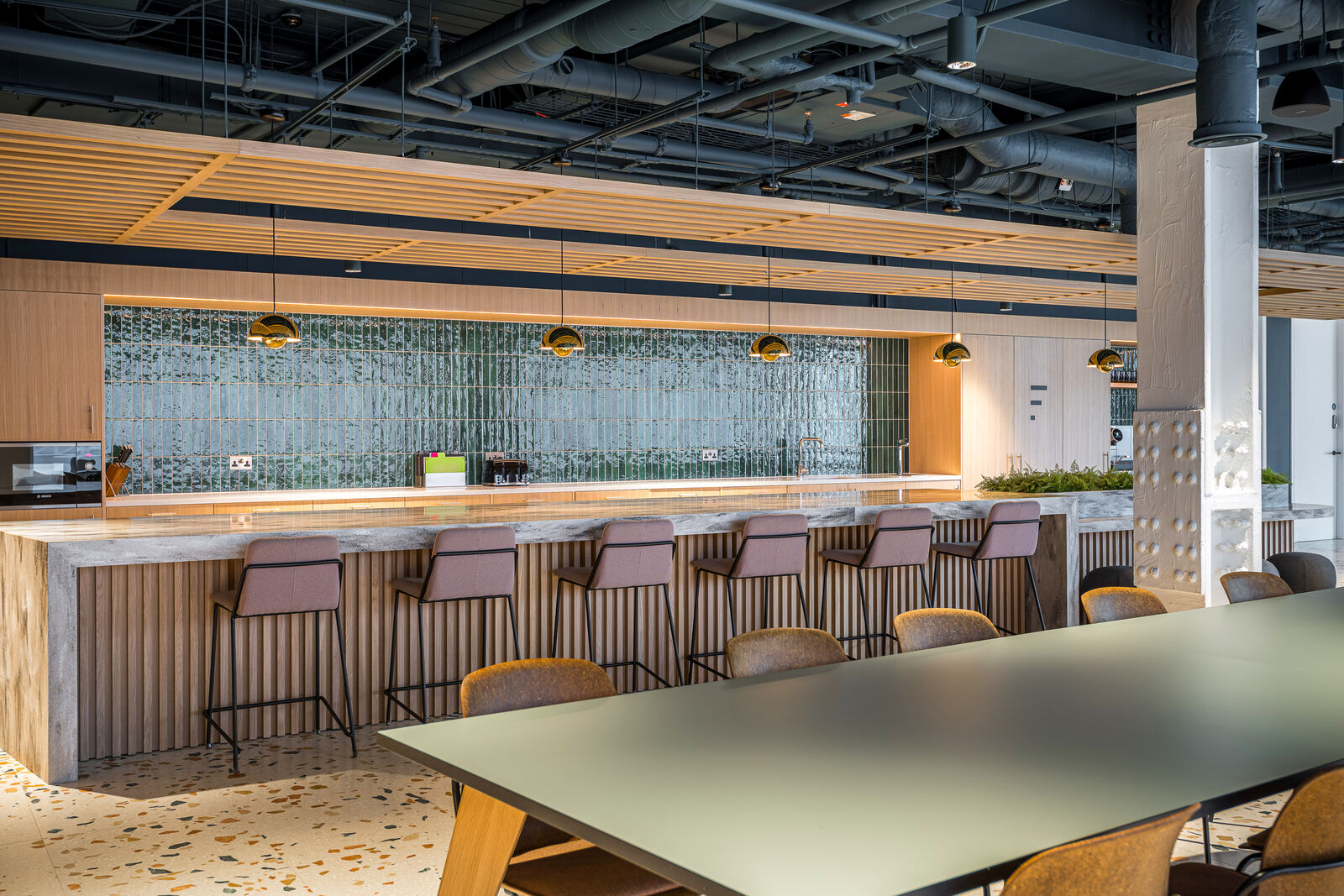
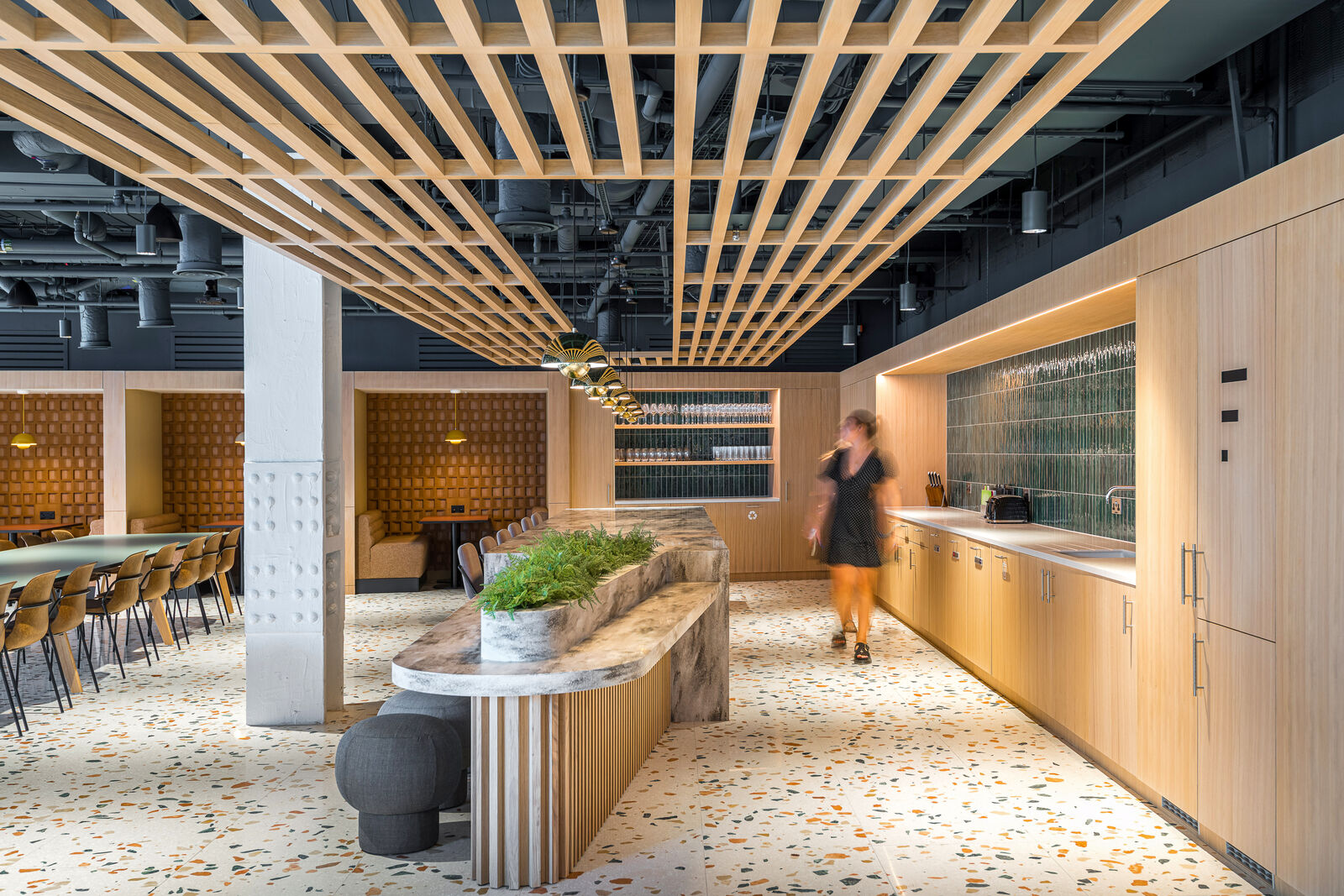
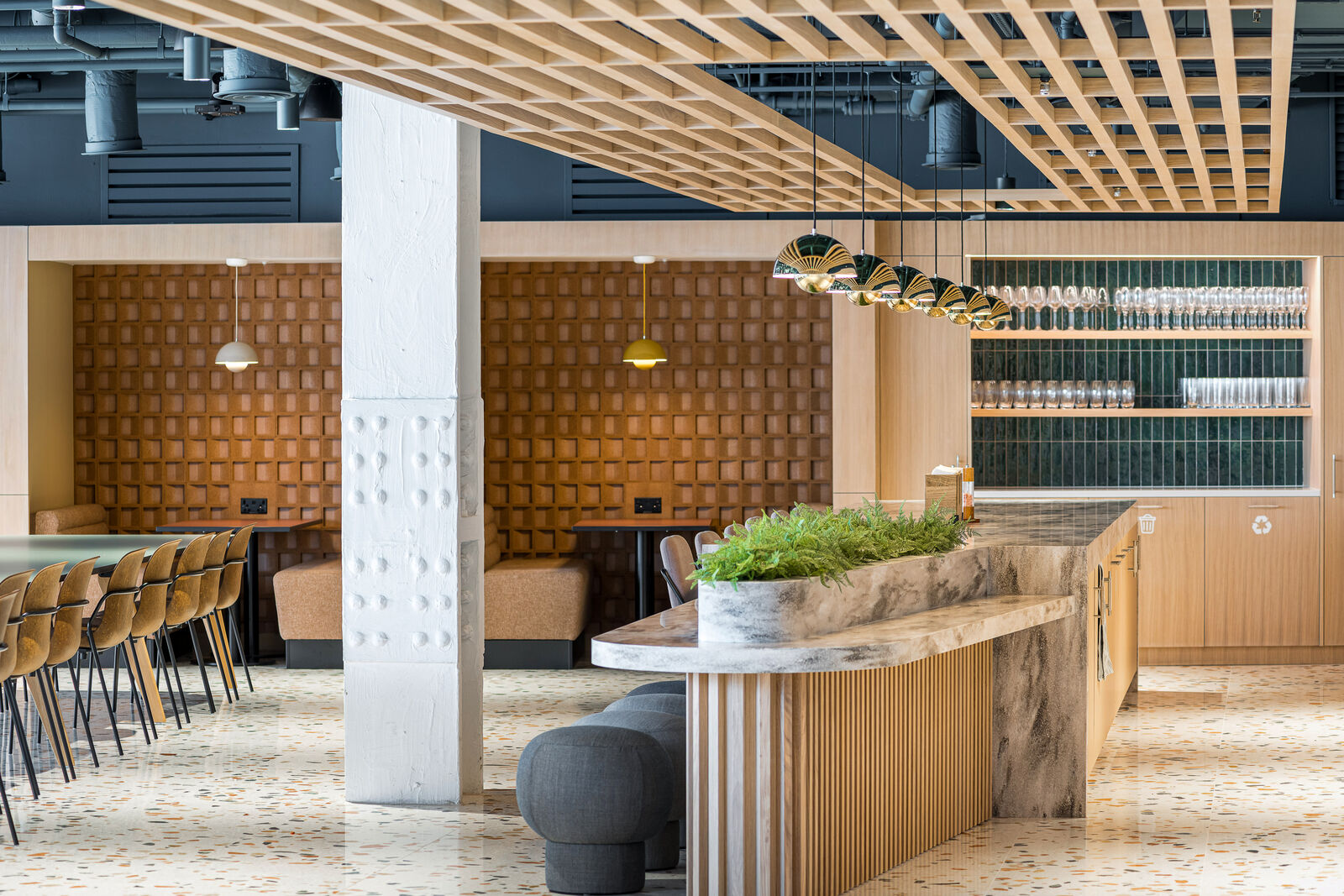
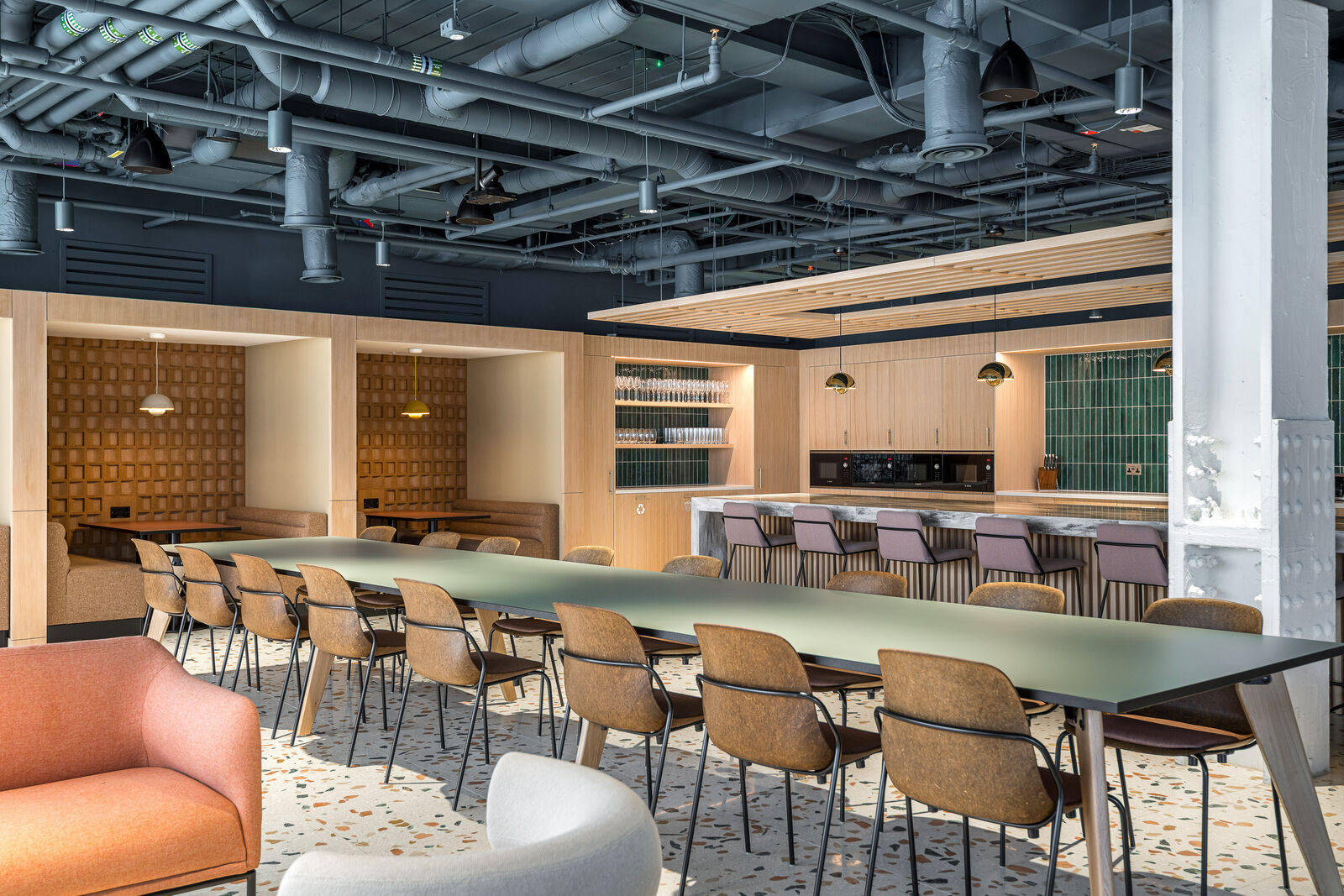
The servery is a full length counter with stools along the front, lit from above, with planting on the shelf behind and a wire mesh screen closing the back. It is detailed the way a hotel bar is detailed, which means the working parts are on the far side of the counter and the side people see is finished. Bins, machines, cabling and the rest of it are inside the joinery. The materials are chosen to be touched at close range: stone for the counter, a fluted timber base, bronze on the accents, a solid surface for the planters.
Stools change the behaviour
A tea point with nowhere to sit produces a queue and a quick exit. Put stools at the counter and people stay for the length of a conversation. That is the entire argument, and it costs the price of eight stools and about a metre of extra depth.
The same instinct at the entrance
At the other end of the floor the arrival space has its own island, and it is the building's old reception desk stripped of its cladding and rebuilt to do a new job. That was a suggestion made at the first meeting rather than a saving found later, and it belongs to a wider position: existing furniture repurposed rather than replaced, and refurbished pieces specified in selected places because they agree with how the client talks about sustainability. The entrance counter is the clearest example, since visitors lean on it without any idea that it used to be somewhere else.
Planting is not styling
The green above the counter and along the run is there for three reasons. It softens the sound, which was asked for explicitly. It breaks up a long horizontal. And it gives the run a reason to be looked at from across the floor, which is how a counter becomes a destination rather than an amenity. Planting on a commercial fit out only works if somebody is contracted to maintain it. That is a line in the operating budget rather than the capital cost, and it is worth saying so at design stage rather than at handover.
Materials with a story
Parts of the scheme use materials chosen for what they are made of as much as for how they look, including tables made from mushroom and chairs pressed from hemp. In a servery, where people stand close to the surfaces and put their hands on them, that is one of the few such decisions that actually gets noticed and asked about. Which is the point of putting it here rather than in a meeting room.